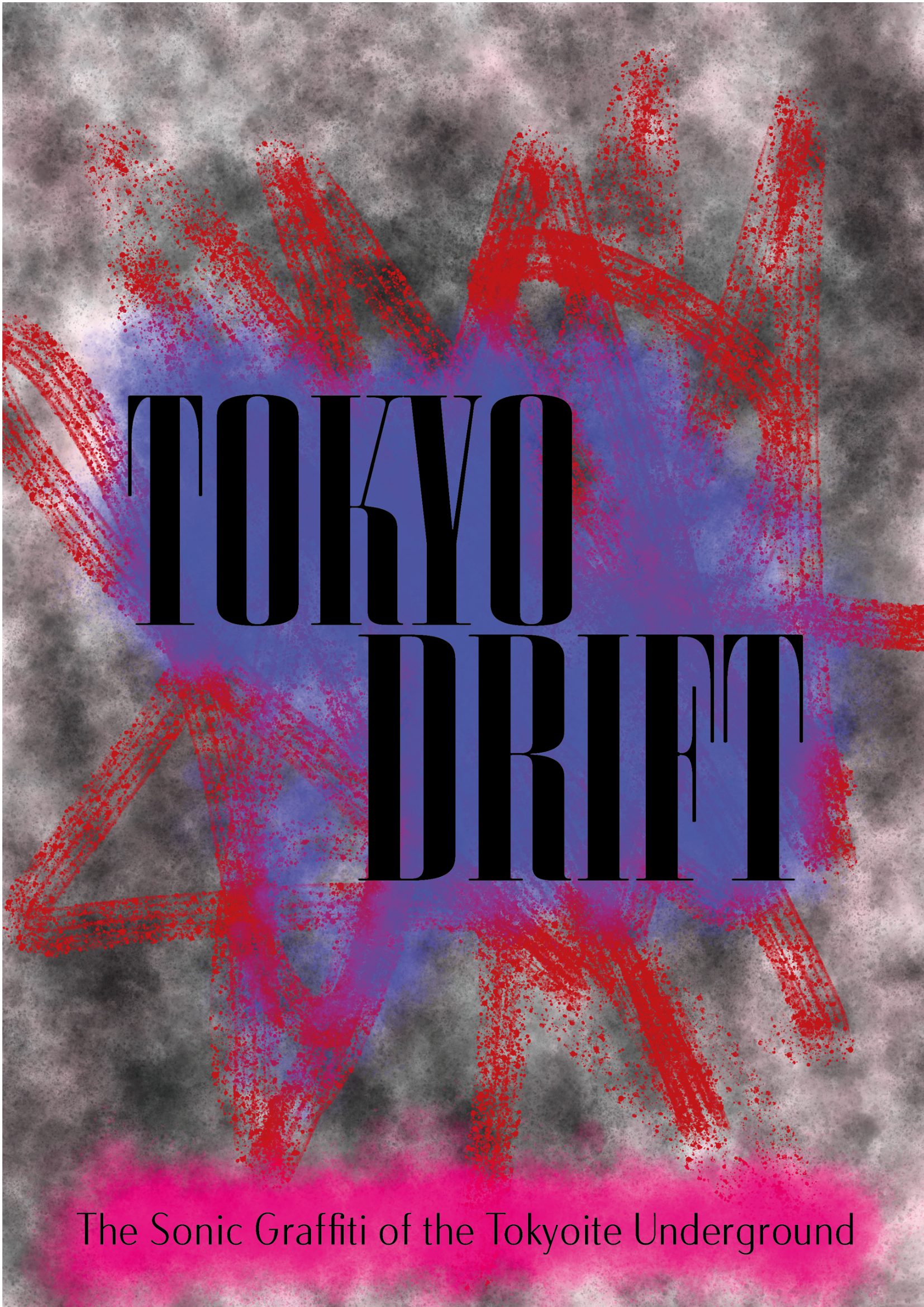
SONIC GRAFFITI
Tokyo Drift: The Sonic Graffiti of the Tokyoite Underground
- Year
- 2025
- Context
- BA Music, University of Oxford (FHS 2025)
- Length
- 43 pages, 10,418 words
- Fieldwork
- Shibuya + Shimokitazawa, Tokyo, Aug – Sep 2024
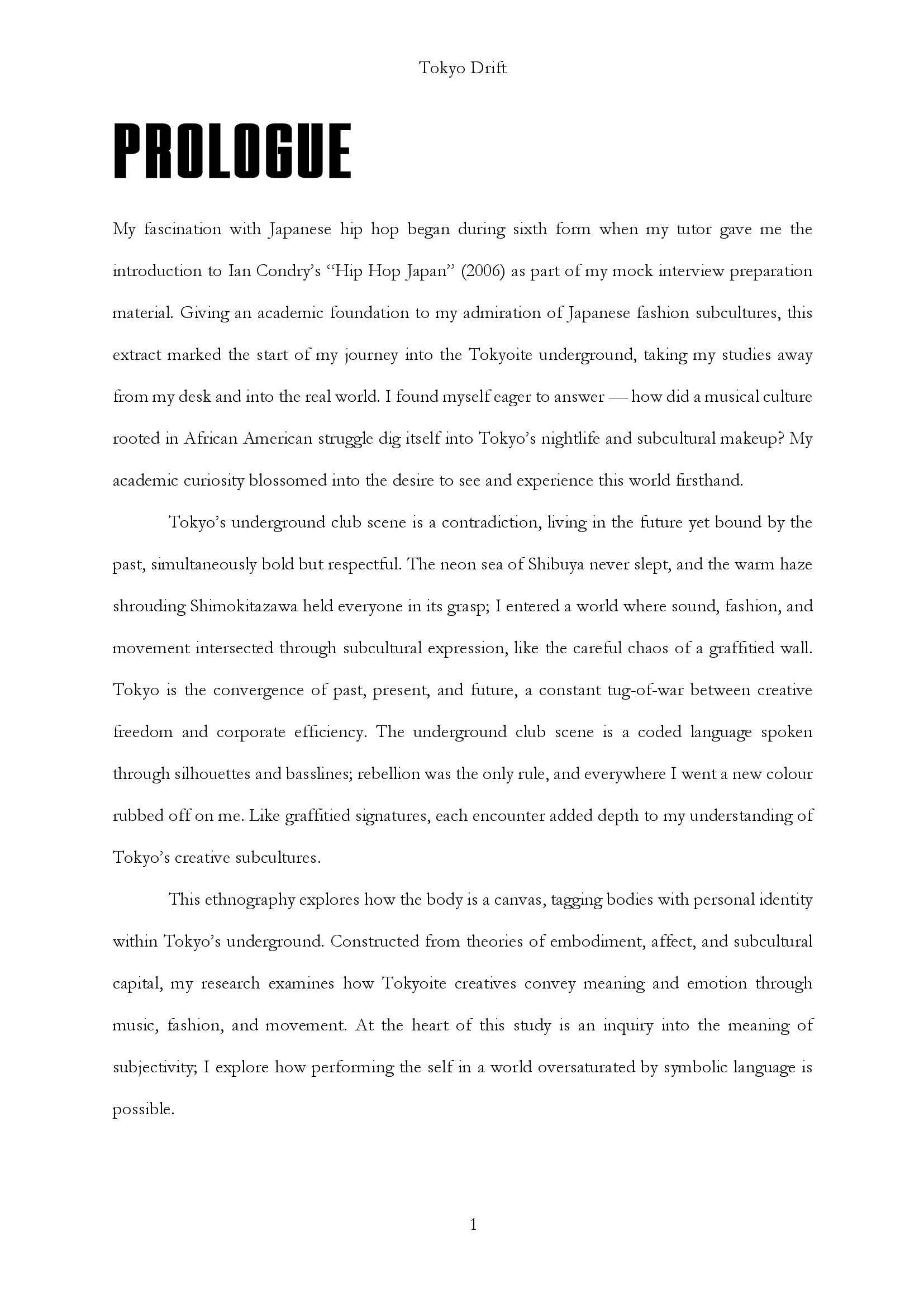
Tokyo Drift is my music ethnography for Oxford Finals, built on three weeks of fieldwork in Shibuya and Shimokitazawa in August and September 2024. I visited eight clubs, interviewed DJs and rappers, and held a dozen informal conversations with producers, designers and club owners, using my own body as the research instrument.
It reads Tokyo's underground club scene as a graffitied wall: the club is the canvas, and every body in it is tagged with memory, nostalgia and identity. Over three chapters (the genesis of Japanese rap, the body as nostalgic canvas, and clubbing as performance and embodiment) it argues that Tokyo's clubs work as curated archives of cultural memory, an embodied resistance to the passive consumption of commercialised music and fashion.
the research, in short
the question
How did a musical culture rooted in African American struggle dig itself into Tokyo's nightlife, and how do people perform the self in a world oversaturated with symbolic language?
the argument
The Tokyoite underground is a performative archive of resistance. The body is where identity, nostalgia and affective exchange are negotiated, and Tokyo's clubs keep cultural memory where New York's act as laboratories.
the approach
Sensory ethnography and participant observation, read through embodiment, affect theory, Bourdieu's capital and subcultural economics, with Schacter's graffiti-as-ornament as the spine.